
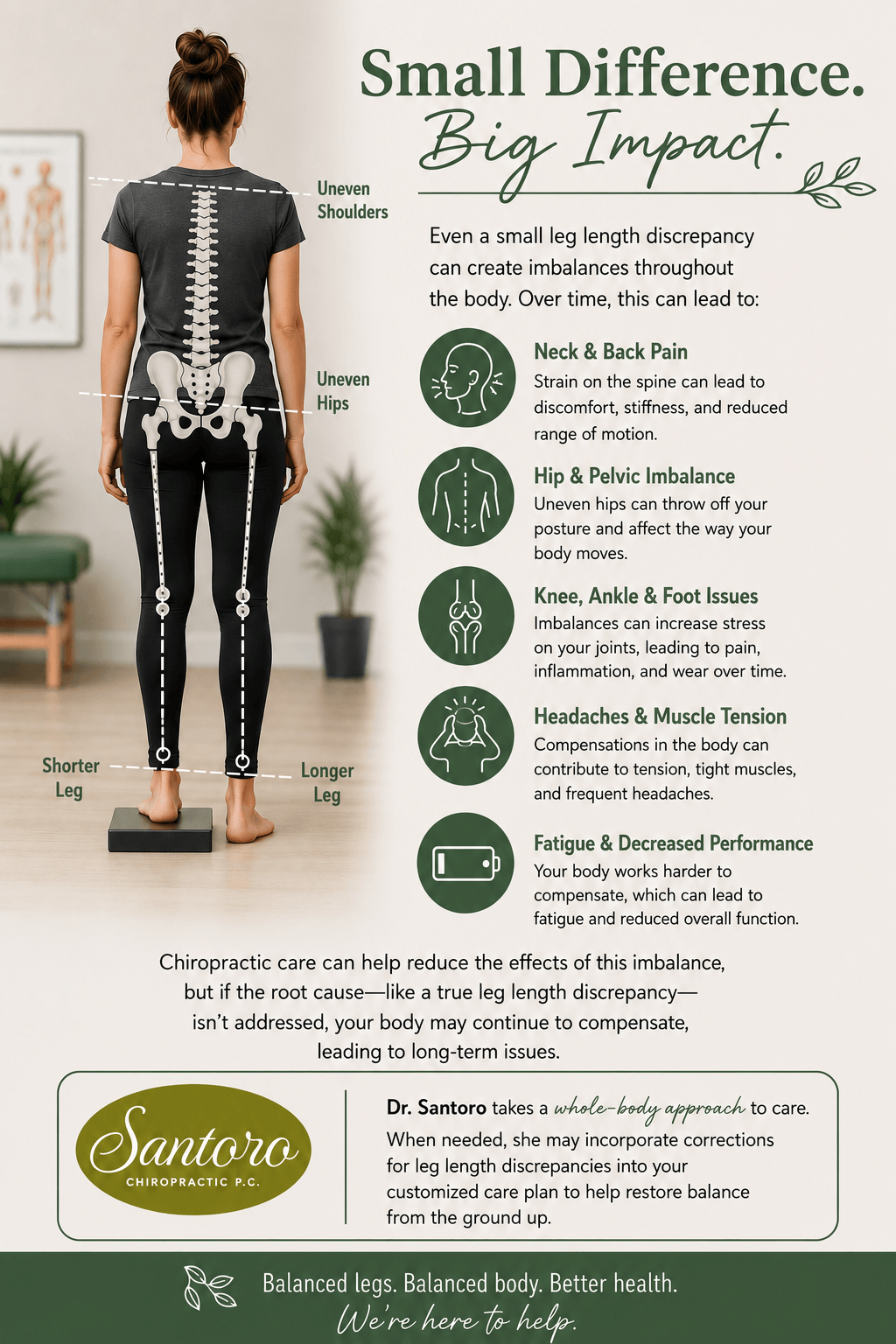
 When one leg is functionally or structurally shorter than the other, the effects can be felt far beyond the hips or legs. A leg length discrepancy can contribute to uneven weight distribution, changes in posture, pelvic imbalance, and abnormal stress on the spine and surrounding joints. Over time, this compensation may lead to recurring low back pain, hip discomfort, knee pain, muscle tightness, or even neck and shoulder tension as the body continually adapts to maintain balance. While some people have no noticeable symptoms, others may find that their discomfort keeps returning despite receiving temporary relief.
Chiropractic care helps to remove interference to the nervous system and can play an important role in restoring proper joint motion, improving spinal alignment, and helping the body function more efficiently, but it is also important to identify and address the underlying cause of recurring interference and imbalance. If a true leg length discrepancy is present and left unaddressed, the body may continue to compensate, allowing the same patterns of stress to return over time. Depending on the individual, management may include a professionally recommended heel lift in addition to chiropractic care. Taking a comprehensive approach can help create longer-lasting improvements rather than simply managing recurring symptoms.
At Santoro Chiropractic in Indiana, PA, Dr. Santoro understands that no two patients are exactly alike. As part of a thorough examination, she evaluates factors that may be contributing to spinal and postural imbalances, including the possibility of a leg length discrepancy when clinically appropriate. When indicated, Dr. Santoro may incorporate strategies to help address this imbalance alongside personalized chiropractic care, with the goal of improving overall biomechanics and supporting lasting results. By removing interference, she helps patients work toward better nervous system function, movement, and long-term spinal health.